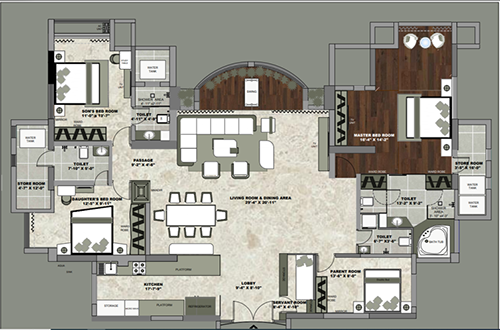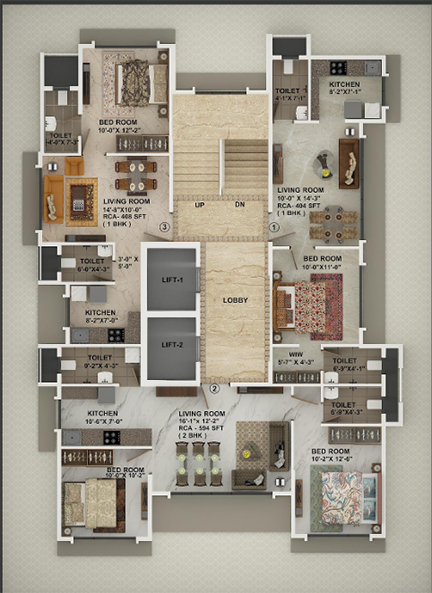
Designing the layout of a residence is about organizing spaces in a way that balances functionality, comfort, aesthetics, and efficient use of space. Here’s a clear and structured description of how residential layout design works:
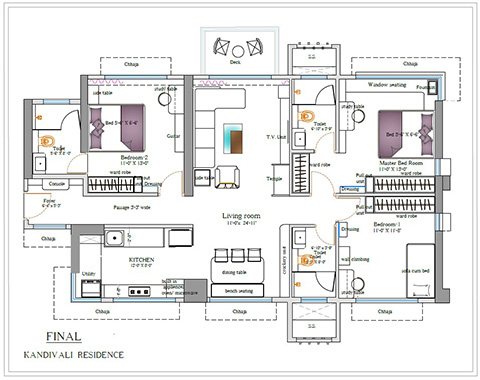
A residence is divided into different zones based on use:
- Public Zone: Living room, drawing room, guest areas
- Private Zone: Bedrooms, bathrooms
- Service Zone: Kitchen, store, utility areas
- Circulation Zone: Corridors, staircases, passages
👉 Proper zoning ensures privacy and smooth movement inside the house.
Circulation and Movement
- Smooth and logical movement between rooms
- Avoid unnecessary corridors or wasted space
- Example: Kitchen near dining, bedrooms away from noisy areas
Room Planning and Furniture Layout
- Each room is designed considering furniture placement and usability
- Proper spacing ensures comfort and accessibility
- Example: Kitchen follows the work triangle (sink–stove–fridge)
Aesthetics and Comfort
Harmonious design with pleasing colors, materials, and textures Open layouts for spacious feel Balance between beauty and usability